Ship it, then fix it

Ship over perfect means you launch when the core of the product works, then improve it with real feedback instead of waiting until it feels finished. Perfect is a feeling you have alone, and it never shows up on its own. Real use shows you what to fix.
I've held to this for every product and page I've built. It isn't a license to be sloppy. It's a way of deciding what counts as ready, and what can wait for version 2.
What does "ship over perfect" actually mean?
It means that the cost of waiting is higher than the cost of a rough edge. Every week a product sits unfinished, you learn nothing and earn nothing. A rough edge that real users hit teaches you something the same day.
It doesn't mean shipping something broken. The core has to do the job it promises, and the things that protect trust, such as clear pricing, honest terms and working payments, have to be right the first time.
How do you decide when something is ready?
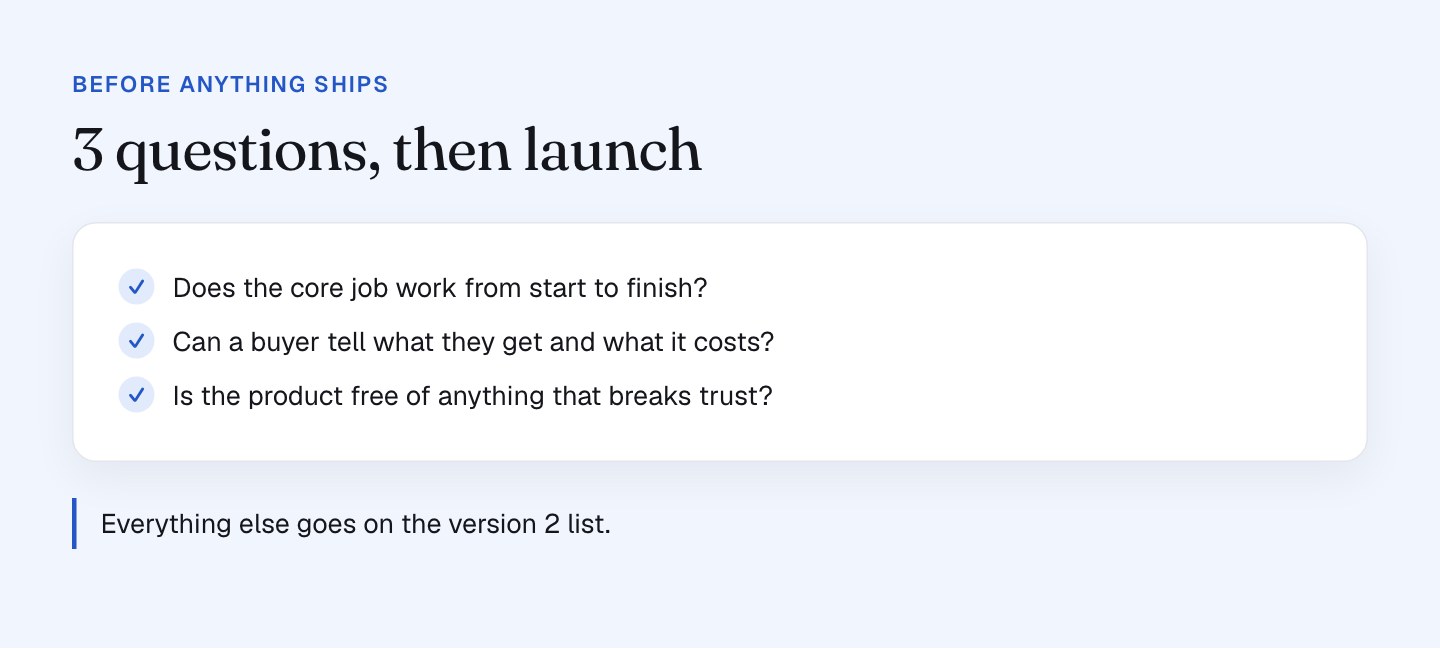
I use 3 questions. Does the core job work from start to finish? Can a buyer tell what they're getting and what it costs? Is there anything that would damage trust if someone found it? If the answers are yes, yes and no, it's ready.
Everything else goes on a list. Nicer animations, extra options, a second layout and edge cases for rare users are all version 2 material. Writing them down means you don't forget them, and it stops you from holding up the launch for them.
What happens after you ship?
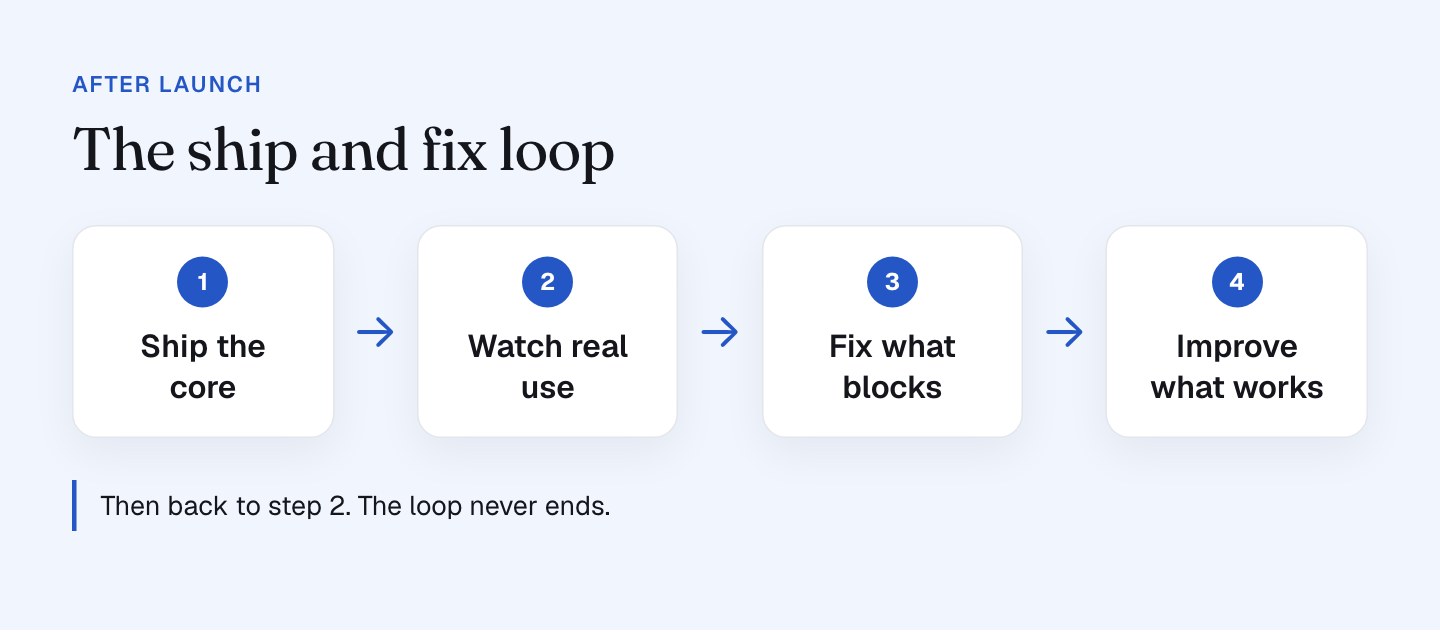
The loop starts. You watch what people do, fix what blocks them, and then improve what already works. The first version is a draft, and the loop is how it becomes a good product.
I do this with my own pages too. When I wrote about my checkout, I didn't pretend it was finished. Each post in that series ends with the upgrades I'm testing next, like the ones in order bumps that buyers thank you for. The page works, and I'm still improving it.
What should you never skip before you ship?
Anything that touches money or trust. The price has to be shown clearly, the terms have to be honest, and the payment has to work. A buyer who feels tricked doesn't come back, and no later update fixes that first impression.
Everything a buyer can't see is different. Internal tidiness, a prettier admin screen and a cleaner code structure can all wait. If a buyer wouldn't notice it on day 1, it's a candidate for the list, not for the launch.
What does shipping look like for a page, not a product?
The same rules apply. A page is ready when the visitor can understand the offer and take the next step. The headline, the price and the button have to be right. The third font choice does not.
I treat every page as version 1. I write down what I would change, publish, and then test those changes 1 at a time with real traffic. That is far more useful than redesigning in private for another month.
Why do people wait for perfect?
Because it feels safe. Perfectionism hides fear of judgment behind a reasonable sounding standard. As long as the product isn't out, nobody can say it isn't good.
The trouble is that private polishing is guessing. You make it better in the directions you can imagine, while users will take it in directions you can't. I'd rather be corrected by real people early than be right in a vacuum for months.
How does this work with building products?
It works best when each product has a narrow job. A small scope means the core can be finished quickly, and the first version can be useful from day 1. I wrote about that in why every app I build does 1 job.
It also pairs with how I sell. A launch only teaches you something if traffic reaches it, so I send paid traffic early, as I explain in paid traffic first, organic as the multiplier. Without visitors, shipping is only publishing.
FAQ
Isn't shipping fast the same as shipping low quality?
No. Quality means the core works and trust is protected, and that is non-negotiable. What you postpone are extras and polish, not basics.
How long should I wait before I launch?
Until the core job works end to end and the price and terms are clear. If you're adding things that nobody asked for yet, you're past the point where you should have shipped.
What do I do with feedback after launch?
Sort it by whether it blocks people or only annoys them. Fix blockers first, then improve what already works, and test 1 change at a time so you know what made the difference.
Ship the version you can defend, and let the market write the rest of the list.